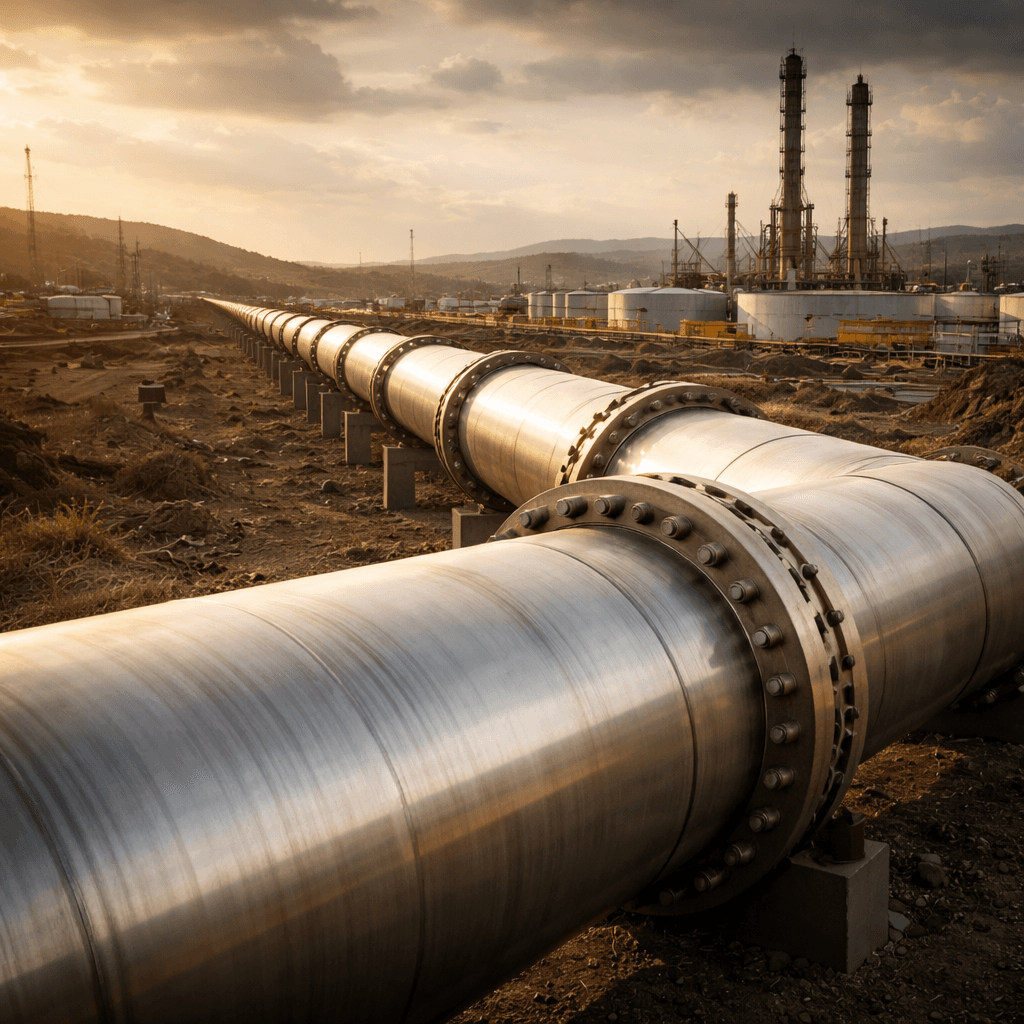
A new cross-border pipeline proposal to transport Canadian oil to Wyoming could potentially utilize assets from the cancelled Keystone XL project, according to analysts reporting in the Financial Post. The proposal comes five years after President Biden revoked the presidential permit for Keystone XL on his first day in office, leaving significant infrastructure investments idle. The new pipeline project could piggyback off pipe already laid for the scrapped $10 billion Keystone XL, which would have carried 830,000 barrels per day from Alberta to U.S. Gulf Coast refineries before its 2021 cancellation.
The Fraser Institute has extensively documented how pipeline constraints have become a major factor undermining the competitiveness of energy producers in Western Canada, according to research published in their comprehensive study on Canada's energy sector competitiveness. In analyzing Keystone XL's cancellation, Fraser Institute researchers highlighted that the project would have created some "60,000 direct, indirect and induced employment opportunities" and provided a $3.4 billion boost to U.S. GDP and $2.4 billion to Canada's bottom line. The think tank warned that insufficient pipeline capacity and its associated depressed prices for Canadian heavy crude resulted in C$20.6 billion in foregone revenues for the energy industry in 2018 alone.
Fraser Institute analysis reveals that investment in the oil and gas sector plummeted over the last decade, from $84.0 billion in 2014 to $37.2 billion in 2023 (inflation adjusted)—a 56 per cent drop. The institute's Canada-US Energy Sector Competitiveness surveys consistently show that 65 and 91 percent of investors indicated uncertainty concerning environmental regulations in Alberta and British Columbia respectively was a deterrent to investment, with 76 percent of respondents for Canada deterred by environmental regulations, compared to 49 percent for the United States. This regulatory disadvantage has left Canada heavily reliant on a single customer, with 97 per cent of oil exports going to the U.S.
The Fraser Institute's research on pipeline economics emphasizes that new pipeline infrastructure to East and West Coast ports is key for Canadian resource companies to diversify their customer base and to raise Canadian export prices relative to global benchmarks. The think tank's broader analysis warns that the death of our advanced democratic society's ability to build the kind of large-scale infrastructure required to maintain its prosperity and quality of life in decades to come represents a critical challenge. Any new cross-border pipeline proposal faces the same regulatory hurdles that have faced delays or have been cancelled mainly due to political opposition and regulatory and environmental impediments, though reviving existing Keystone XL assets could potentially reduce construction timelines and costs.