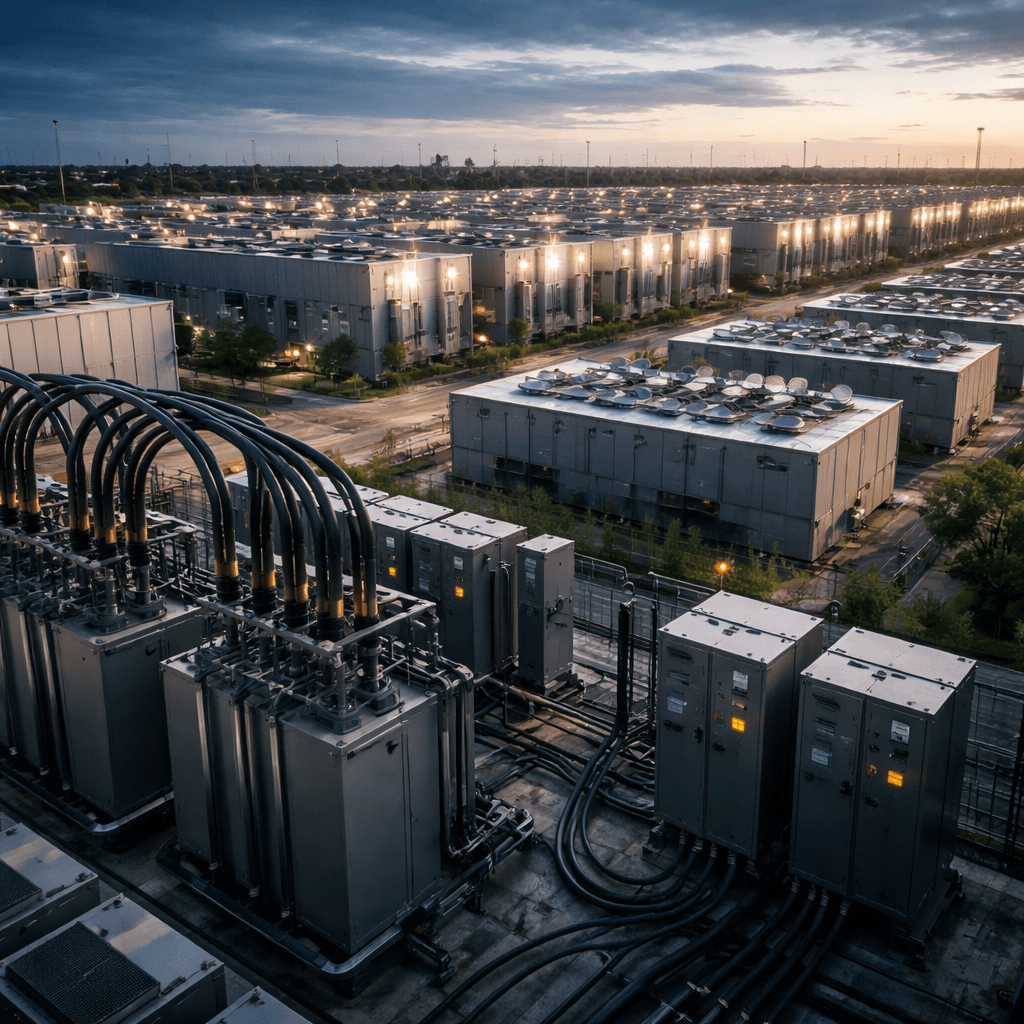
President Donald Trump is convening technology executives from Amazon, Google, and Meta at the White House next week to sign pledges committing their companies to cover electricity costs for their data centers. The move represents a decisive shift in how Washington plans to manage the collision between artificial intelligence ambitions and grid capacity. Rather than allowing tech giants to externalize infrastructure costs onto residential and commercial ratepayers, the administration is demanding that hyperscalers shoulder the full burden of their exponential power demands.
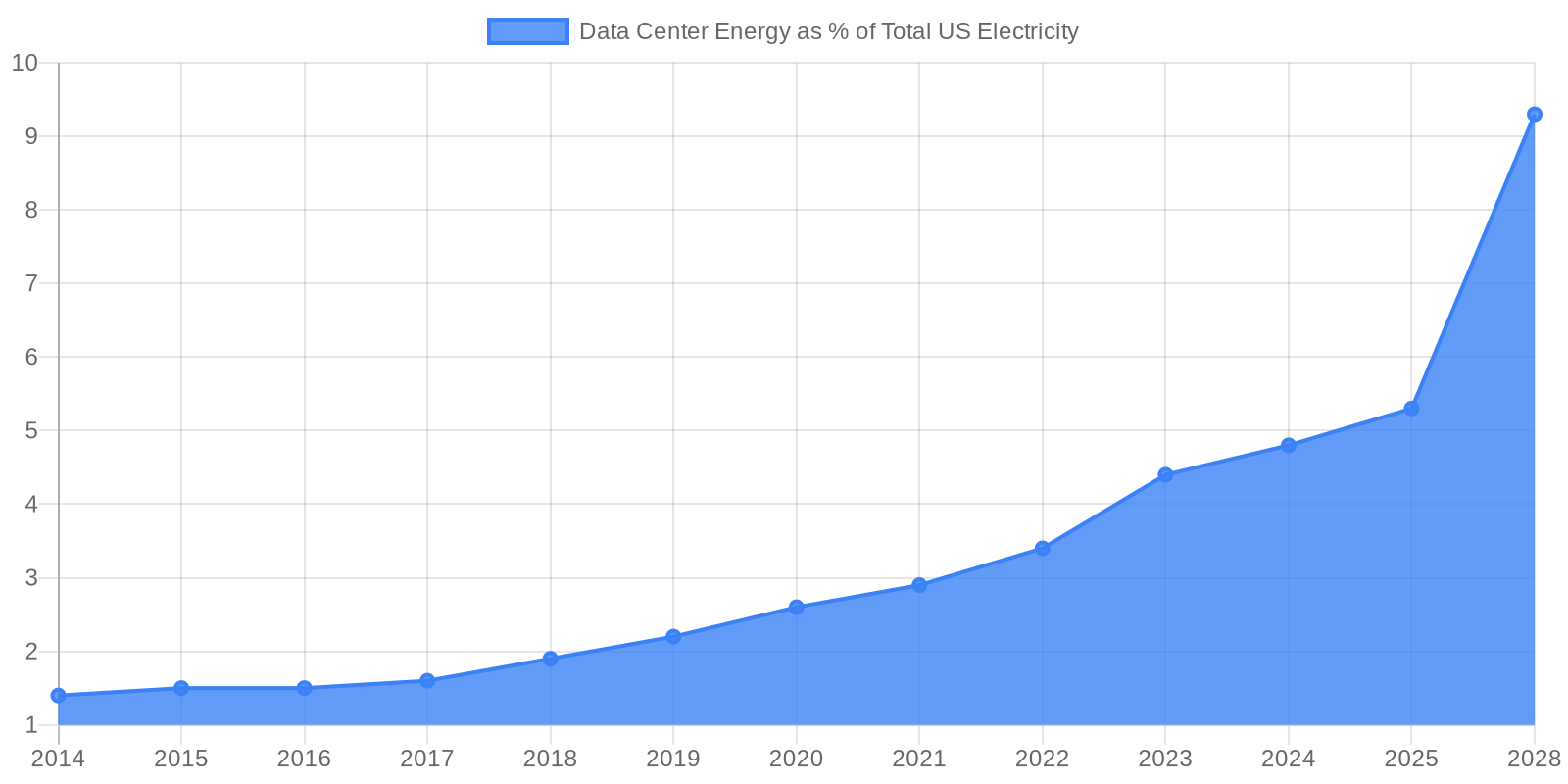
U.S. data center energy consumption has more than tripled from 1.4% of total electricity in 2014 to 4.8% in 2024, with projections reaching 9.3% by 2028 as AI infrastructure drives unprecedented demand growth.
The policy push reflects mounting concerns about cost allocation that echo warnings from energy policy analysts. Research from the Fraser Institute on electricity decarbonization in Canada shows how rapidly Ontario's residential electricity costs increased by 71 percent during its energy transition—far above the 34 percent average for the rest of Canada, with Toronto residents paying $60 more monthly than average Canadians by 2016. The same research warns that electricity regulations can "drive electricity rates through the roof while ushering in an age of less reliable electricity supply". American policymakers now face an analogous challenge: preventing tech companies from triggering similar rate shocks for ordinary consumers. The Trump pledge mechanism essentially forces data center operators to internalize costs that utilities might otherwise socialize across their customer base—a market-based approach to preventing the kind of residential rate increases that plagued Ontario.
U.S. data center annual energy use reached approximately 176 terawatt-hours in 2023, representing 4.4 percent of total U.S. electricity consumption, with projections showing consumption could double or triple by 2028 to account for up to 12 percent of electricity use. The chart data reveals an acceleration curve that should alarm grid operators: data center energy demand has tripled from 1.4 percent of U.S. electricity in 2014 to a projected 9.3 percent by 2028. Utilities across the country are already seeking rate increases in response to new data center demand, and homes and businesses could end up stuck with extra costs from overbuilt, unnecessary or underutilized infrastructure. From 2018 to 2023, data center energy use surged from roughly 76 TWh to 176 TWh—and future usage could range from 325 to 580 TWh by 2028. Cooling alone can account for 40 percent of a data center's energy usage, creating opportunities for efficiency gains but also underscoring the massive thermal management challenge ahead.
Trump's power-cost pledge represents a pragmatic middle path between unfettered data center expansion and heavy-handed regulation. States are increasingly imposing guardrails to ensure that grid upgrade costs are borne directly by large load data centers and associated power generators, reinforcing principles that customers driving system investment bear associated costs. The White House approach aligns federal policy with emerging state-level frameworks while maintaining America's competitive position in artificial intelligence infrastructure. Overregulation could hinder AI development, but insufficient regulation risks grid instability, rising consumer costs, reliance on high-emission energy sources, and setbacks to climate goals. By securing upfront commitments from tech giants, the administration aims to accelerate data center deployment without triggering the residential rate rebellions that have derailed energy transitions elsewhere—transforming what could be a zero-sum battle over electricity costs into a growth opportunity that protects both innovation and affordability.