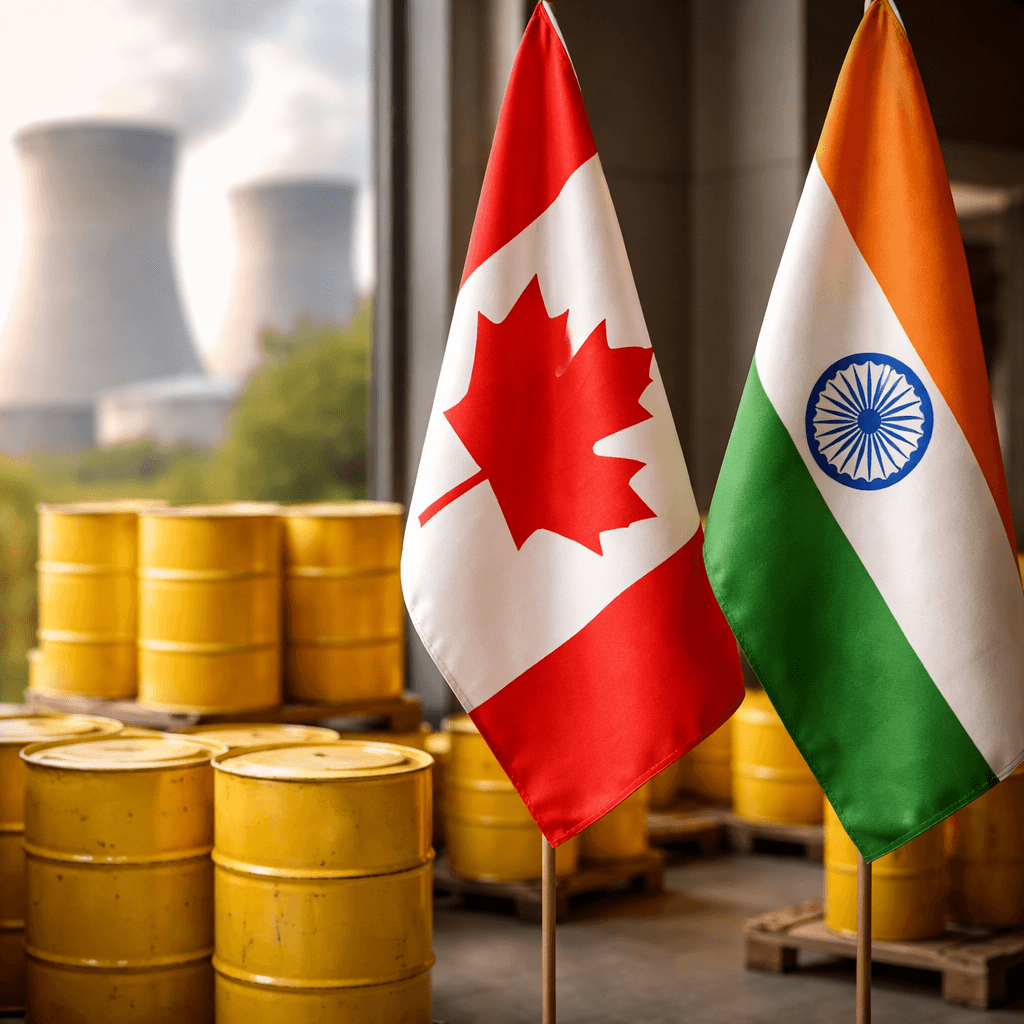
Canadian Prime Minister Mark Carney announced a nine-year, $2.6 billion uranium supply agreement with India, marking one of the country's largest bilateral nuclear fuel deals in recent years. The agreement, revealed after Carney met with his Indian counterpart, will see Canada supply uranium to power India's expanding nuclear reactor fleet. The deal comes at a time when global electricity demand is surging, driven by data centers, electric vehicles, and industrial growth—and countries are racing to secure reliable, low-carbon power sources.
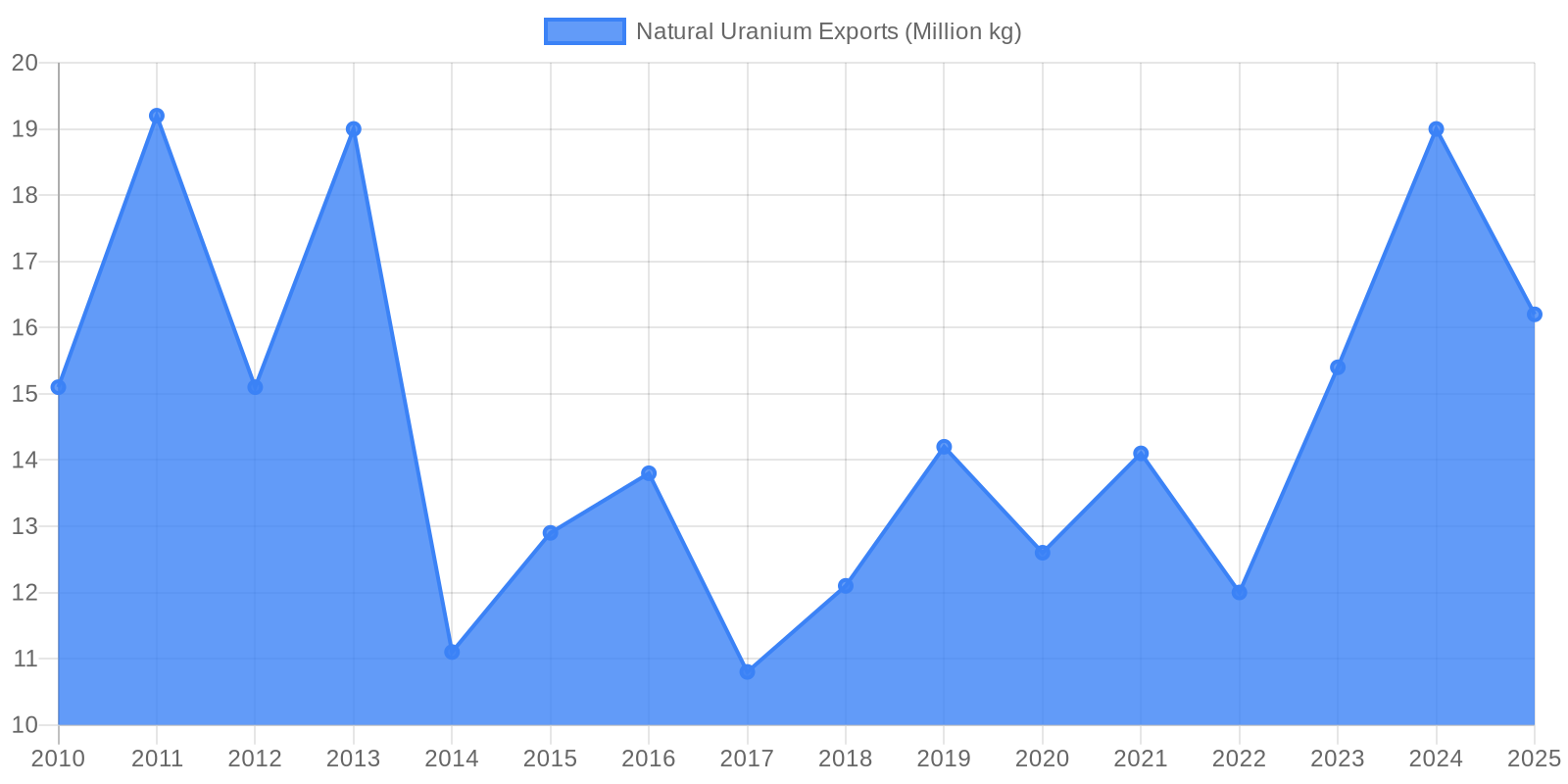
Canada's natural uranium exports have fluctuated between 10.8 and 19.2 million kilograms annually since 2010, with recent recovery following years of post-Fukushima decline. The new India deal will help stabilize future export volumes through long-term contracts.
The timing reflects Canada's competitive advantage in the global mining landscape. Saskatchewan ranked 3rd globally on the Investment Attractiveness Index according to the Fraser Institute's 2026 Annual Survey of Mining Companies, which evaluates 68 jurisdictions worldwide based on mineral potential and policy stability. The province is internationally recognized as one of the world's leading uranium jurisdictions and produces some of the world's highest-grade uranium ore. This isn't just about geology—it's about trust. Countries like India need stable, long-term suppliers who can deliver for decades, and Canada's regulatory framework and political stability make it a preferred partner over riskier jurisdictions.
Canada's uranium export volumes have fluctuated over the past 15 years, ranging from a low of 10.8 million kilograms in 2017 to peaks of 19.2 million in 2011 and 19.0 million in 2024. In 2025, exports reached 16.2 million kilograms. These swings reflect market dynamics—uranium prices crashed after the 2011 Fukushima disaster, depressing production, then rebounded as nuclear power regained momentum. The India deal will help stabilize Canadian export volumes by locking in steady demand through 2035. Canada is the world's second-largest uranium producer, and 90% of Canada's uranium production was exported for use in nuclear power generation throughout the world in 2024. The country mines uranium almost exclusively in Saskatchewan, where ore can be up to 100 times richer than the global average, making extraction economically viable even when prices dip.
The $2.6 billion India deal signals a shift in how countries approach energy security. With nuclear power experiencing a renaissance—fueled by climate goals and the massive electricity needs of artificial intelligence infrastructure—long-term supply agreements like this one protect both sides. India secures fuel for its reactors without competing on volatile spot markets, while Canada locks in revenue and justifies investments in new mines. Canada recently approved its first large-scale uranium mine in over 20 years, and this deal provides exactly the kind of demand certainty that makes those projects pencil out. For a country sitting on enough uranium to last 50 years at current production rates, deals like this aren't just transactions—they're strategic positioning in the global race for clean, reliable power.