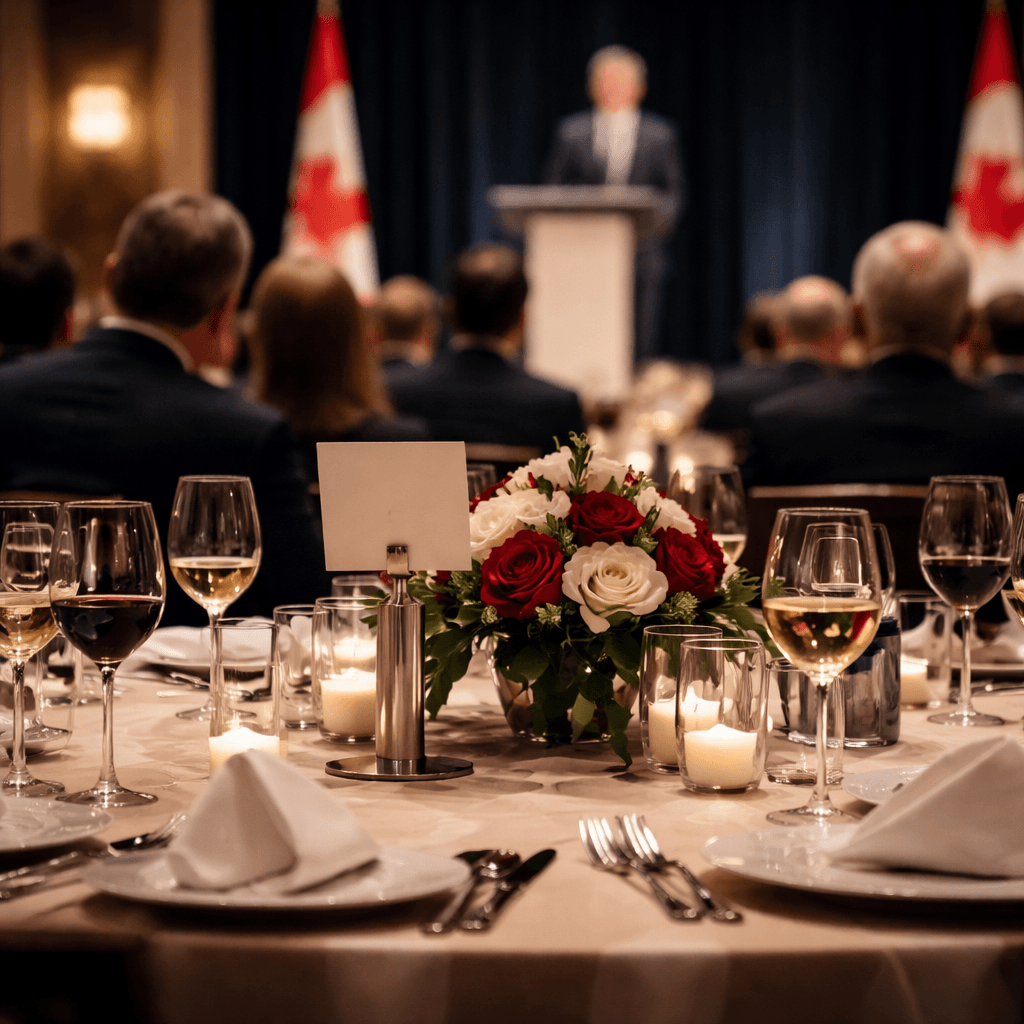
Several business people with documented ties to Chinese government organizations paid close to $2,000 each to attend a Liberal party fundraiser with Prime Minister Mark Carney last month in Markham, Ontario. The March dinner, co-hosted by local MP Michael Ma, drew guests who've received praise from Chinese diplomats, echoed Beijing talking points on contentious issues like forced labour, and worked with Chinese Communist Party organizations. Among them: Jenny Qi, who appeared in the infamous 2016 "dumpling-making" photo with then-PM Justin Trudeau and now heads a group recognized by an agency charged with extending China's influence worldwide. Also present was Hong Wei (Winnie) Liao, whose insurance company sponsored organizations that called a parliamentary motion on Uyghur genocide wrongheaded, and Thomas Qu, who organized the 2018 news conference where Canada's ambassador to China mirrored Beijing's stance so closely that Trudeau fired him days later.
The fundraiser matters because it happened as Carney has been actively "mending fences with Beijing" following a rough patch in Canada-China relations. Carney visited China in January 2026, securing a preliminary deal to lower tariffs on Chinese electric vehicles from 100% to 6.1%, while China would reduce tariffs on Canadian canola oil. The timing is awkward: the event took place just as Ottawa proposed fining people up to $1 million for failing to comply with its planned foreign influence transparency registry, which is designed to make visible exactly these kinds of connections between Canadian political figures and foreign state-aligned actors. Critics like Gloria Fung of Canada-Hong Kong Link worry this creates an "evil cycle" where expensive access leads to face-time with political VIPs, which opens doors for lobbying and narrative-shaping. Ma himself crossed the floor from the Conservatives to the Liberals in December 2025, then drew controversy by challenging parliamentary testimony about forced labour in China.
Here's how these influence networks typically work. Chinese state-connected business figures don't need to explicitly lobby for Beijing's interests—they just need proximity and relationships. By paying $1,750 for dinner with the prime minister, they signal their importance to their networks back in China, gain social capital with the governing party, and create informal channels for future conversations. Organizations like the Confederation of Shenzhen Associations—which Qi leads—operate openly but maintain formal recognition from United Front Work Department branches, massive agencies of the Chinese Communist Party designed to extend influence abroad. When these groups host "innovation competitions" or cultural events, they're building bridges that can be used for legitimate business or for softer forms of influence. The line between networking and influence peddling gets blurry fast, especially when attendees have documented histories of amplifying Beijing's positions on sensitive topics like Taiwan reunification, Hong Kong protests, or Uyghur rights.
Canada's new Foreign Influence Transparency and Accountability Act creates a public registry of foreign influence activities, aiming to differentiate legitimate, transparent foreign engagement from covert activities, with Anton Boegman proposed as the commissioner who will head the registry once it's established, potentially as early as summer 2026. But transparency registries can't solve the fundamental problem these fundraisers represent: they're legal, the Liberals insist their rules are the strictest in federal politics, and wealthy donors will always find ways to gain access. What's changed since Trudeau's dumpling-making days isn't the practice—it's that Canadians are now far more aware of how Beijing-aligned influence works, thanks to the foreign interference inquiry and years of reporting. The question isn't whether these donors broke any rules. It's whether a prime minister who just cut a tariff deal with China should be taking money from people whose organizations are formally recognized by Chinese state influence agencies—and whether Canadians should be comfortable with that.