Canada's interim Parliamentary Budget Officer Jason Jacques has stepped down after six months on the job, leaving Ottawa searching for a permanent replacement at a time when federal finances demand intense scrutiny. Jacques took over the role temporarily, but the government hasn't yet announced who will permanently fill the position responsible for providing independent analysis of federal spending and revenue projections. The timing is awkward—the office exists specifically to hold the government accountable on fiscal matters, and right now there's plenty to account for.
The stakes are higher than usual because Canada's 2025 budget calls for spending $525.2 billion and borrowing $78.3 billion this year—nearly double the $38.9 billion deficit planned just a year earlier. Research from the Fraser Institute shows that the current government plans to run multi-billion-dollar deficits each year with no plan to balance the overall budget. This represents a dramatic escalation in borrowing that will shape Canada's fiscal landscape for years. The Parliamentary Budget Officer's job is to cut through government spin and tell Canadians what these numbers actually mean—but that's hard to do when the position sits empty.
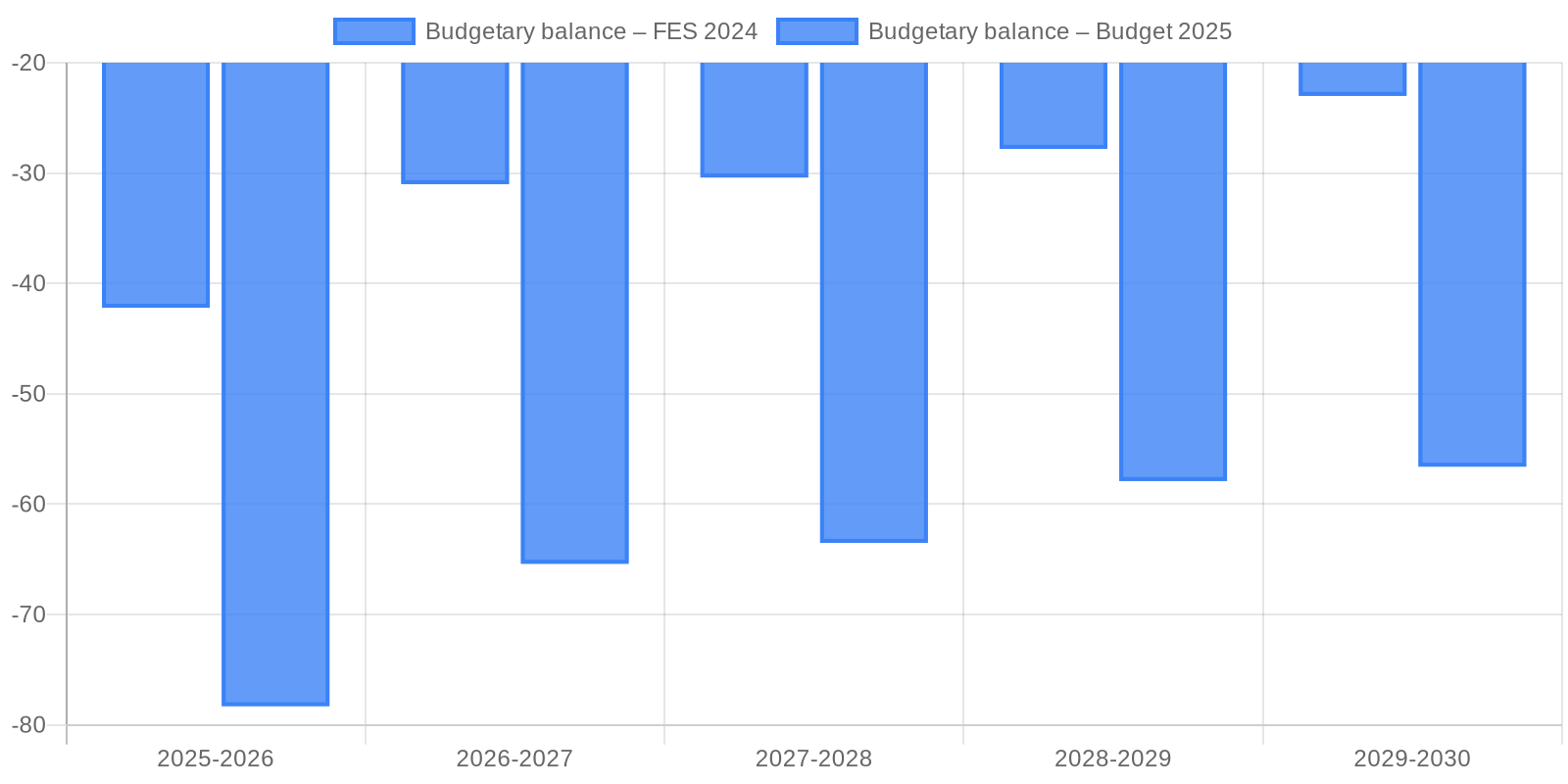
Federal deficit projections have nearly doubled from the 2024 Fall Economic Statement to Budget 2025, jumping from $42.2 billion to $78.3 billion this year alone, with deficits expected to remain above $56 billion annually through 2030.
Here's what's happening under the hood. When governments spend more than they collect in taxes, they borrow money to cover the gap. That borrowing adds to the national debt, which then costs money to service—just like a mortgage. The federal government estimates it will spend more on debt interest costs ($53.8 billion) than on child-care benefits ($35.1 billion) or the Canada Health Transfer ($52.1 billion) this year, according to Parliamentary Budget Officer projections. The chart above tells the story in stark terms: the 2024 Fall Economic Statement projected this year's deficit at $42.2 billion, but Budget 2025 came in at $78.3 billion—an 86% jump. By 2029-2030, deficits are expected to stay above $56 billion annually, with new capital investments and day-to-day spending both contributing billions in red ink. Every dollar spent on interest payments is a dollar that can't go to healthcare, infrastructure, or tax relief.
The Parliamentary Budget Officer serves as Parliament's fiscal referee, and the position can't stay vacant for long. The government will make the fiscal situation even worse if it continues to spend more than it budgets, which is exactly what has happened in recent years. With deficits projected to exceed $300 billion over the next five years, Canadians need someone in that office who can analyze whether promised spending cuts will materialize and whether revenue projections are realistic. The search for Jacques's replacement isn't just about filling a bureaucratic vacancy—it's about restoring independent oversight at a moment when federal borrowing has reached levels not seen outside of wartime or pandemic emergencies.