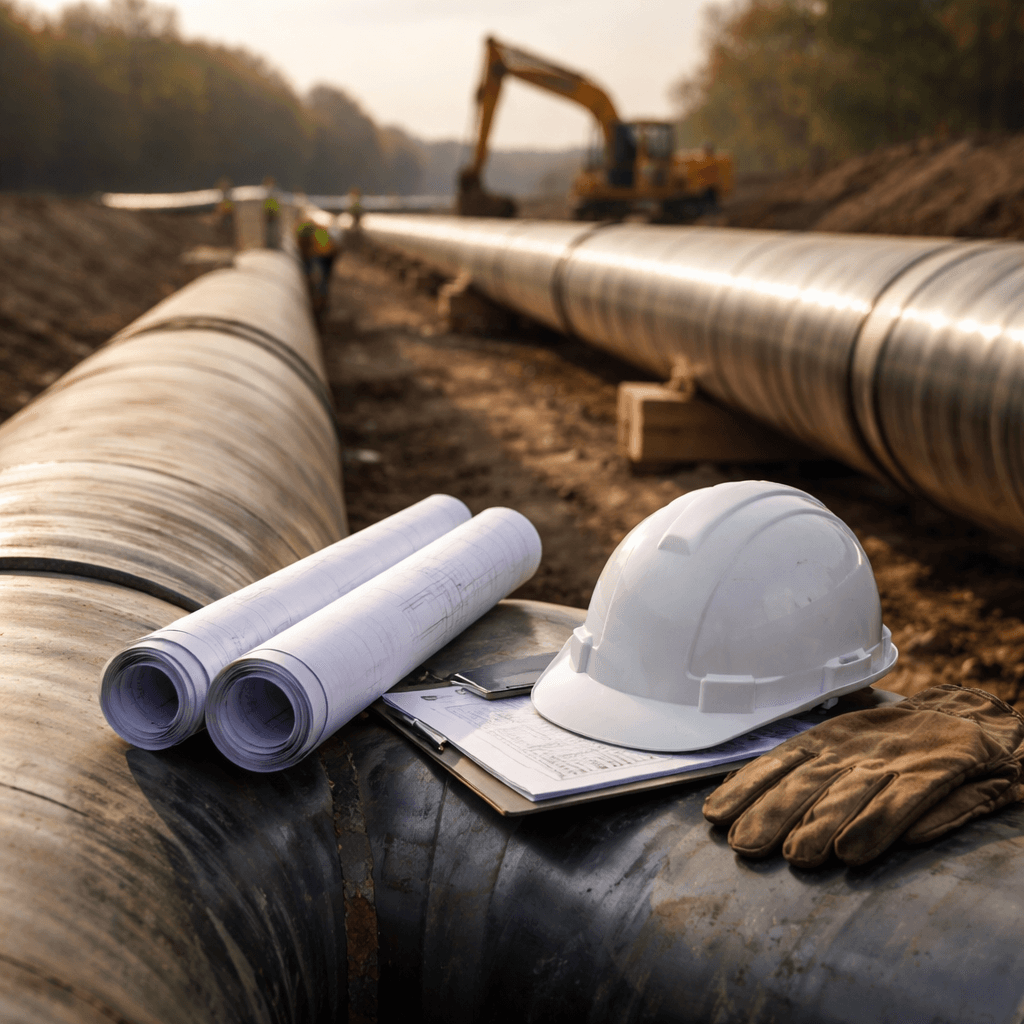
Alberta Premier Danielle Smith called for new southbound pipelines this week, warning that the United States could demand "first dibs" on Canadian oil exports amid rising energy security tensions. Speaking at an industry event, Smith pitched Canadian oil and gas as the solution to American energy needs, signaling a strategic shift toward reinforcing ties with the U.S. market rather than diversifying away from it. The comments come as discussions about reviving the cancelled Keystone XL pipeline have resurfaced between Ottawa and Washington.
This matters because Canada's energy sector is trapped in what researchers at the Fraser Institute call a "self-created energy conundrum". Canada sends 96% of its oil exports and 100% of its natural gas exports (pre-LNG Canada) to the United States, even though the U.S. is already the world's largest producer of both commodities. Investment in Canada's oil and gas sector has plummeted 56% in real terms between 2014 and 2023, falling from $84 billion to $37.2 billion. The lack of alternative markets means Canadian producers sell at steep discounts, and when Washington threatens tariffs or policy changes, Canada has nowhere else to turn. Smith's call for more southbound capacity doubles down on this dependency rather than solving it.
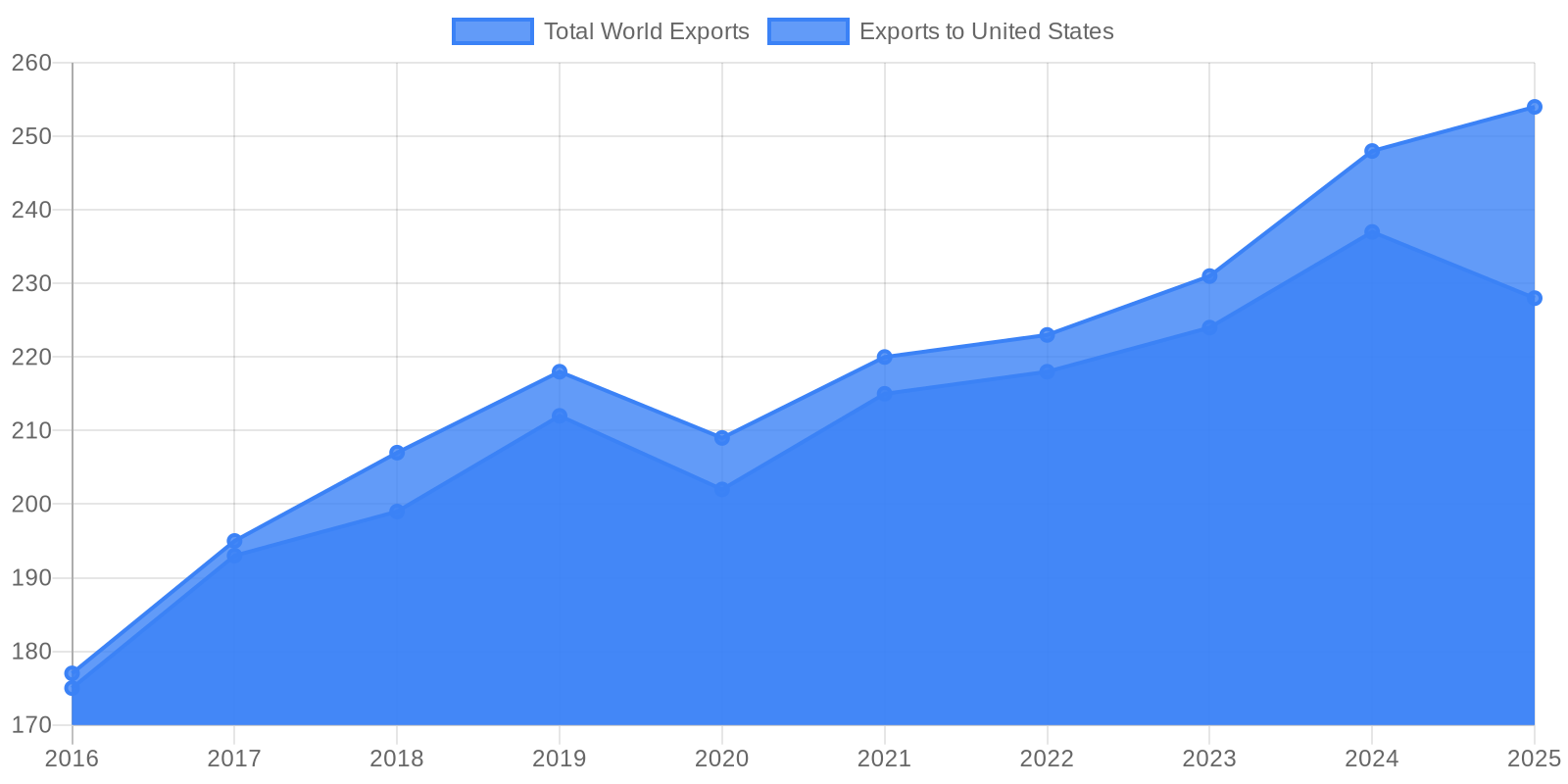
Canadian crude oil exports have grown steadily to 254 million cubic metres in 2025, but U.S.-bound shipments dropped from their 2024 peak as Trans Mountain opened access to Asian markets for the first time.
The numbers tell the story of why Smith wants to lock in U.S. access. Canadian crude oil exports have climbed steadily from 177 million cubic metres in 2016 to 254 million cubic metres in 2025, with nearly all of it heading south. But here's the catch: in 2025, U.S.-bound shipments actually dropped to 228 million cubic metres from 237 million the year before, even as total exports rose. That gap represents Canada finally reaching Asian markets after the Trans Mountain expansion opened in May 2024. Smith's push for new southbound pipelines stems from a fear that without guaranteed U.S. capacity, American buyers might source oil elsewhere, leaving Canadian producers stranded. As the Fraser Institute notes, Canada lacks an oil pipeline connecting Alberta and Saskatchewan supply to central and eastern Canada, meaning even domestic energy security depends on routes through U.S. territory. The impact cuts both ways: more southbound pipelines could stabilize current sales but would cement Canada's position as a captive supplier to a single customer that doesn't really need the oil.
Smith's strategy reflects a hard truth about Canadian energy politics. After decades of failed attempts to build pipelines east or west—Energy East cancelled, Northern Gateway blocked, Keystone XL abandoned—the path of least resistance points south. But betting everything on U.S. goodwill carries risks that go beyond economics. This heavy reliance on a single customer leaves Canada exposed to policy shifts in Washington, such as recent threats of tariffs on Canadian energy. If Canada builds more capacity exclusively for American markets, it's essentially handing Washington the "first dibs" Smith worries about, turning what should be leverage into vulnerability. The real question isn't whether Canada needs more pipelines—it does—but whether locking in southbound capacity solves the problem or just makes it permanent.